
Fluffy Drop - No Timer
UniRise StudioTrivia
4.5991.00 Reviews
- Version
- 1.19.2
- Installs
- 1.00M
- Age Rating
- Everyone
Screenshots
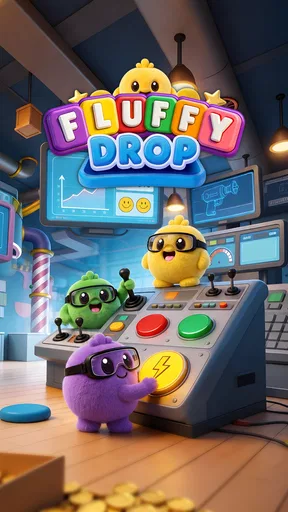
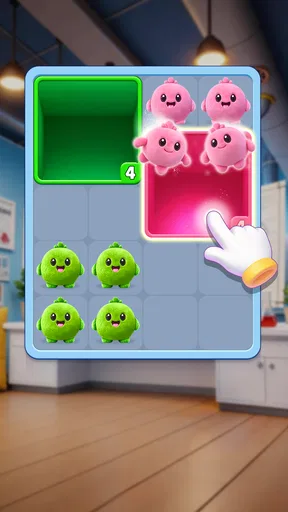
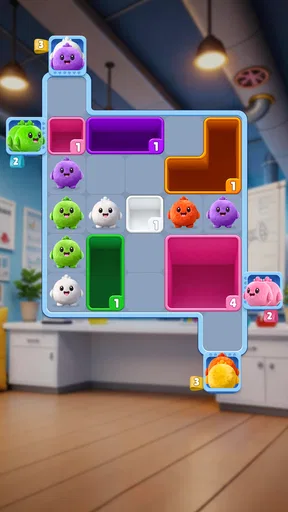
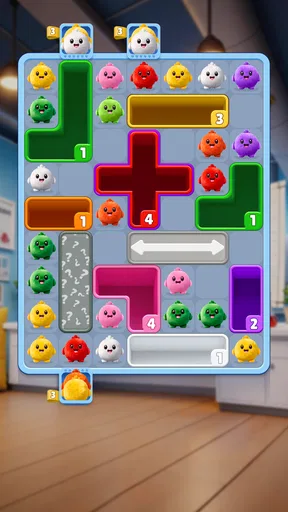
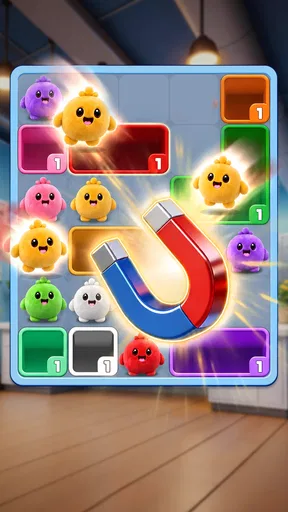

Our Review of Fluffy Drop - No Timer
 Analysis by Appyee
Fluffy Drop - No Timer is the kind of trivia game I reach for when I want a light puzzle break rather than a demanding session. Its presentation points toward a gentle, approachable experience, and that impression matters because the game is built around keeping your attention without making every answer feel like a race. I found it easiest to enjoy in short bursts, especially when I wanted something more interactive than scrolling but less intense than a competitive quiz.
The game comes from UniRise Studio and is listed as a free title for everyone. It has reached over a million installs and holds a 4.7 average from around twelve thousand ratings, which suggests that its relaxed puzzle direction has found a sizeable audience. I would not treat those figures as a guarantee that every player will love it, but they do fit my impression of a game designed to be immediately welcoming rather than specialised or intimidating.
How the early goals make the first sessions work
The strongest part of the opening is its low-pressure invitation to keep trying. A trivia game can easily make a new player feel tested before they understand its rhythm, but Fluffy Drop - No Timer benefits from a softer starting point. I could focus on reading the question, considering the available answers and learning how the game expects me to think without also watching a countdown disappear.
That no-timer approach is more important than it may sound. In many quiz alternatives, speed becomes an invisible second subject: knowing the answer is not enough if I cannot select it quickly. Here, the early goal feels more like building a reliable habit of observation and recall. That makes the game suitable for a quiet break, for playing beside someone else, or for letting a younger player explore without feeling rushed.
I also like that the early experience does not need a complicated explanation to be enjoyable. The basic loop is easy to understand: face a puzzle, make a choice, see how the attempt develops, and continue toward the next small objective. That simplicity gives the game a useful advantage over trivia titles that bury the actual questions under menus, competitive rankings or too many currencies.
For a realistic everyday example, I can imagine opening it while waiting for a coffee or during a short commute where I am not driving. I can play attentively for a few minutes, stop without feeling that I abandoned a long match, and return later with the same relaxed mindset. It also works well as a shared screen activity at home because the absence of a timer gives two people room to discuss an answer instead of arguing over who reacted first.
One practical tip is to treat the first sessions as a calibration period rather than trying to rush through them. I paid more attention to the wording of questions and to the way the game presented progress. That helped me understand which mistakes came from not knowing an answer and which came from reading too quickly. In a timer-based quiz, that distinction is often hidden by pressure; here, it is easier to notice and improve.
Why the gentle presentation matters
The cozy direction gives the trivia format a different emotional tone. I do not approach it expecting a serious examination or a head-to-head contest. Instead, the surrounding mood makes a wrong answer feel like part of the journey. That is a useful choice for players who enjoy the satisfaction of solving things but dislike the embarrassment or frustration that can come from public failure.
At the same time, a gentle presentation can create a risk: if the questions or goals do not provide enough variety, the experience may begin to feel repetitive. This is the first trade-off I noticed. The same calm structure that makes the game accessible may not satisfy someone looking for a deep knowledge test, a highly competitive ladder or a demanding campaign. I would recommend it to players who value comfort and steady progress more than status.
Progress signals and the value of visible movement
A good casual game needs to show that my time is producing something. Fluffy Drop works best when I can connect each completed puzzle with a sense of forward movement. The individual questions are small, but their role is larger: they create a sequence of manageable decisions that keeps the session from feeling like a random collection of trivia.
That structure is especially helpful for people who do not normally finish long games. I often lose interest when progress depends on large milestones that take hours to reach. A puzzle adventure with smaller signals can be more inviting because each play session has a clear purpose. Even when I only have a short window, I feel that I have done something complete rather than merely started another unfinished task.
I would use the game in two different ways. When I am tired, I would play for the immediate satisfaction of answering a few questions. When I am more focused, I would use the same session to look for patterns in my mistakes and become more deliberate. That flexibility is one of its better qualities: it does not force every player to approach trivia with the same level of seriousness.
There is also a useful psychological distinction between progress and pressure. Progress tells me that I am moving through the experience; pressure tells me that I must keep playing now. Fluffy Drop leans more toward the first idea. That makes it easier to put down, which is healthy for a casual game, although it may also mean that players who depend on constant urgency will find the loop less gripping.
My second practical tip is to avoid judging the game only by how many correct answers I get in one sitting. The more meaningful signal is whether I understand the questions better over time and whether the goals encourage me to return without making the return feel compulsory. That is where the game’s cozy puzzle identity has more value than a simple score-chasing design.
What progress cannot replace
Progress indicators are useful, but they cannot compensate for weak question variety. If someone wants a broad, constantly surprising trivia library, they should approach this as a relaxed puzzle adventure rather than a definitive knowledge database. I would choose a dedicated quiz platform instead when my main goal was competitive comparison, specialised subjects or a large social challenge.
Fluffy Drop is better suited to a player who wants the act of answering to sit inside a pleasant progression loop. That difference affects expectations. It is not the game I would open to prove that I know more than friends. It is the one I would choose when I want questions to support a calm session and a sense of gradual completion.
Difficulty, pacing and the absence of a countdown
The difficulty curve feels more approachable because the game removes one of the most common sources of artificial difficulty: limited response time. That does not make every question easy. It simply separates knowledge from reflexes. I can think through wording, reconsider an option and make a choice because I believe it is right, not because it was the first answer I noticed.
This creates a more honest kind of challenge for some players. If I get something wrong, I have fewer excuses related to speed or distraction. The game gives me space to reason, so I have to take responsibility for the decision. I appreciate that balance, particularly in a trivia format where a timer can turn a thoughtful question into a panic exercise.
The drawback is that players who enjoy rapid-fire intensity may feel under-stimulated. A countdown can create excitement even when the underlying question is simple, and Fluffy Drop deliberately avoids that sensation. The pacing is therefore a matter of taste, not an automatic advantage. I found the slower rhythm comfortable, but I would not recommend it to someone who wants the adrenaline of beating a clock.
The lack of a timer also changes how the game works for different ages. Since the content rating is Everyone, the accessible presentation makes sense for a broad audience. A child can have time to understand a question, while an older player can enjoy the puzzle without needing fast reactions. That does not mean every question will suit every person equally, but the basic pacing removes a barrier that often excludes casual or less confident players.
One of the more useful ways to play is to set a personal stopping point before beginning. Because the game does not push me with a countdown, I can decide to complete a small group of puzzles and stop there. This keeps the experience refreshing and prevents the relaxed loop from turning into aimless repetition. It is a small habit, but it makes the game feel more intentional.
The current version is 1.13.1, and it requires Android 7.0 or later. For someone using an older device, the operating-system requirement is worth checking before getting invested in the idea. On a compatible phone, the game’s straightforward concept should be easy to understand, but the real question is whether its slower, puzzle-first rhythm matches the player’s preferred kind of challenge.
Retention without turning every session into an obligation
The game’s retention appeal comes from the combination of small goals, approachable questions and a calm atmosphere. I can see why that mixture encourages repeat visits: it offers a simple reason to return without demanding a long commitment. The best casual games make starting easy, and this one benefits from not presenting each session as a major event.
Still, there is a fine line between a comfortable routine and a loop that lacks urgency. Without a timer, strong competition or a highly demanding difficulty curve, the game needs its progression to carry much of the motivation. For me, that worked when I was in the mood for a soft puzzle break. On days when I wanted sharper goals, the same design felt less compelling than a more competitive trivia alternative.
That makes it a good companion game rather than necessarily a player’s only game. I would keep it for moments when I wanted low-stress entertainment, while using a traditional quiz app for timed rounds or head-to-head play. The comparison is not a criticism; it clarifies the audience. Fluffy Drop is trying to make trivia feel comfortable and continuous, not to recreate the tension of a game-show final.
There is also a financial point to consider. The game is free to play, with individual in-app purchases ranging from $0.99 to $39.99. I would approach those purchases carefully and decide in advance whether the unpaid experience already gives me enough enjoyment. A free entry point is welcome, but a wide purchase range means I would avoid tapping through offers casually, especially if a child might use the device.
My third tip is to use the game’s relaxed pace as a reason to play thoughtfully, not as a reason to play endlessly. If I notice that I am answering mechanically, I would stop and return later. The design is at its best when I am engaged with the puzzle. Continuing after that attention has gone can make the experience seem shallower than it actually is.
For families, I would also agree on purchase boundaries before handing over the phone. The Everyone rating makes the game approachable, but age suitability and spending suitability are separate questions. A parent may be happy with the content while still preferring to control purchases. That is a practical consideration that matters more than the cheerful presentation alone.
Who should choose a different kind of trivia game
I would skip this title if my priority were live competition, strict time management, specialised academic subjects or a detailed performance history. A conventional quiz game with timed rounds would be a better fit for measuring speed and knowledge against other players. A more complex puzzle game would also suit someone who wants layered mechanics rather than a gentle sequence of trivia decisions.
I would also be cautious if I tend to lose interest once the novelty of a cozy theme fades. The central appeal depends on enjoying the rhythm of answering and progressing. Players who need constant mechanical discovery may find the experience too restrained. In contrast, people who want a dependable, low-pressure option for short breaks are much more likely to appreciate its priorities.
My progression verdict
After spending time with Fluffy Drop - No Timer, I see its progression as deliberately modest but effective. The early goals make entry comfortable, the progress signals give short sessions a purpose, and the difficulty benefits from allowing thought instead of demanding reflexes. Its pacing is not designed to overwhelm me, and that is exactly why it can work as a daily casual game.
The trade-off is clear. The same calm structure that makes it friendly can reduce excitement for players who want urgency, competition or a steep challenge. I would not describe it as a replacement for every trivia game. I would describe it as a softer alternative for people who want puzzle-solving wrapped in a cozy routine.
UniRise Studio has made a free trivia game that understands the value of giving players room to think. The 4.7 average from roughly twelve thousand ratings reflects strong audience approval, and I can understand the appeal. The game is easy to approach, suitable for Everyone and available on Android devices running version 7.0 or later, while its current 1.13.1 release gives prospective players a clear compatibility point to check.
My recommendation is simple: try it if you want a friendly, no-countdown way to spend a few spare minutes and you enjoy seeing small objectives build into a larger journey. I would not choose it for a competitive quiz night or a serious knowledge workout. For quiet breaks, shared play and players who prefer steady progress over pressure, Fluffy Drop - No Timer offers a pleasant middle ground between a standard trivia app and a lightweight puzzle adventure.
Privacy and Permissions
See what permissions an app requests and how it handles your data.
- Phone
- read phone status and identity
- Wi-Fi connection information
- view Wi-Fi connections
- Device ID & call information
- read phone status and identity
- Other
- view network connections, full network access, control vibration, prevent device from sleeping, Google Play license check
Verdict
Strengths of Fluffy Drop - No Timer
- Relaxed gameplay with no countdown pressure
- Simple controls are easy to learn
- Cute visuals create a friendly atmosphere
- Short sessions work well for casual play
- Suitable for players who prefer stress-free puzzles
Limitations of Fluffy Drop - No Timer
- Gameplay may feel repetitive after extended sessions
- Limited challenge can disappoint experienced puzzle fans
- Progression may lack depth for long-term players
- Some levels can depend heavily on lucky drops
- Ads may interrupt the otherwise relaxing experience
Other Releases by UniRise Studio
View All
Shanghai Mahjongg
Board4.8
Similar Picks in This Category
View All
Millionaire 2026 Quiz & Trivia
Quiz & Trivia Games by Submarine Apps4.5

Brain Test 2: Tricky Stories
Unico Studio4.7

Trivia Crack: Brain Quiz Games
etermax4.4

QuizzLand. Quiz & Trivia game
Quiz & Trivia Games by Mno Go Apps4.8

Brain Test: Tricky Puzzles
Unico Studio4.7

Logo Quiz
bubble quiz games4.5
Frequently Asked Questions
What is Fluffy Drop - No Timer?
Fluffy Drop - No Timer is a casual puzzle game focused on relaxing, pressure-free gameplay. Players arrange or drop fluffy-looking pieces and work toward completing levels or achieving high scores without a countdown clock. Its simple controls and gentle presentation make it suitable for short sessions, although later stages may still require planning and careful placement.
How does the no-timer gameplay work?
The main appeal of Fluffy Drop - No Timer is that you can think before making a move. There is no visible countdown forcing you to act quickly, so you can study the board, test possible combinations, and choose a safer strategy. This makes the game more comfortable for casual players, younger users, or anyone who prefers puzzles without stressful time limits.
Is Fluffy Drop - No Timer free to download and play?
The game can generally be downloaded without an upfront purchase, but availability of optional advertisements, in-app purchases, or extra content may depend on the Android or iOS version and your region. Before installing, check the store listing for current pricing details, supported devices, and purchase information. Some features may require payment or watching advertisements.
Does Fluffy Drop - No Timer require an internet connection?
Basic gameplay may be available offline, which is convenient when traveling or when you have limited mobile data. However, advertisements, analytics, updates, cloud-related functions, or certain store features may require an internet connection. If offline access is important to you, test the game after installation with Wi-Fi and mobile data disabled, because requirements can change between versions.
Is Fluffy Drop - No Timer suitable for children and casual players?
Its straightforward mechanics, soft visual style, and lack of a timer make Fluffy Drop - No Timer approachable for many casual players and families. Nevertheless, parents should review the store age rating, advertising practices, and any available in-app purchases before allowing children to play. The difficulty can also increase over time, so younger players may occasionally need assistance.
Play our best games!


